In picking a game setting the GM has to strike a balance between the familiar and the weird.
Too bog standard and expected and the game can be boring- but too weird and unexpected and the world the game takes place in is difficult for the players to grasp and have the context needed to make interesting choices. Running historically accurate-ish games can run into the roadbump of the players assumptions not lining up enough with the world presented and creating friction between themselves and what their characters would know.
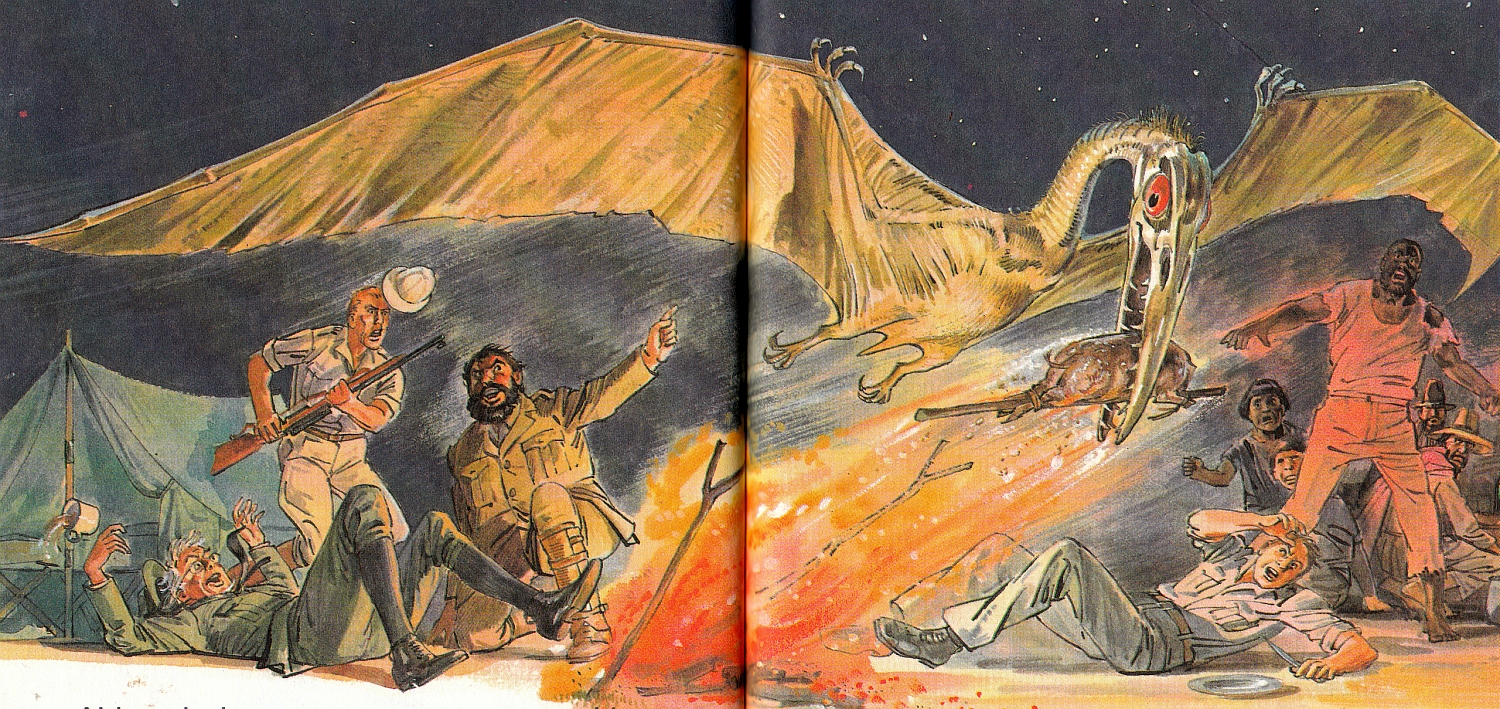
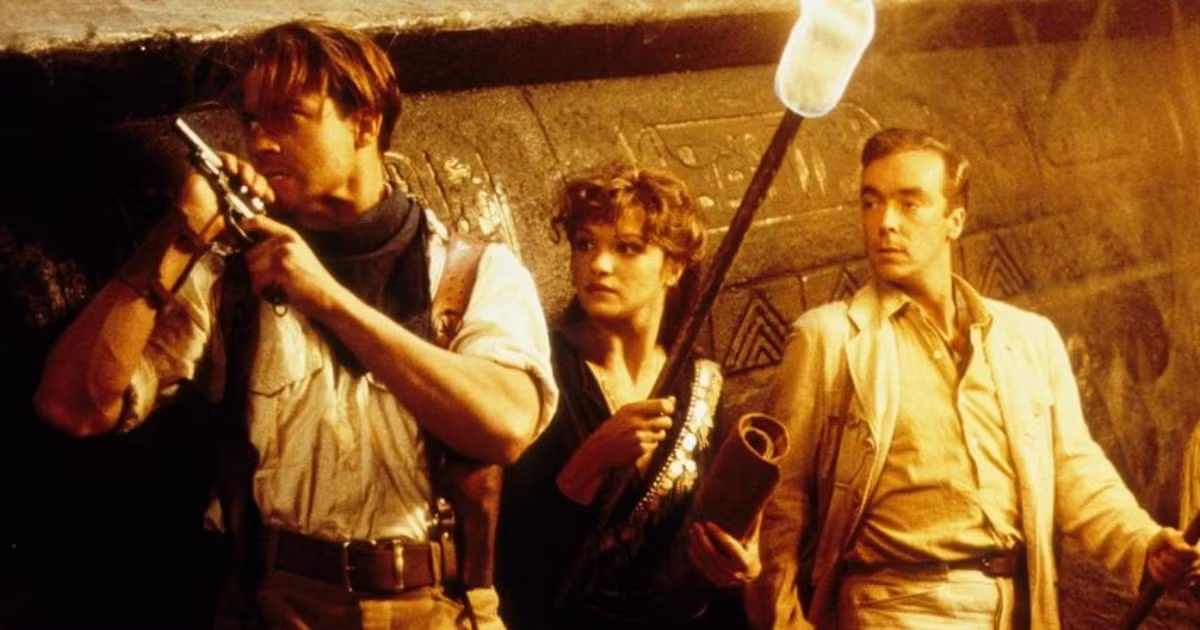
Yet the difference between the player and their character can be bridged by throwing these grounded historically inspired figures into and environment of strangeness and of unknown rules, a fantastical or horrific realm that violates the PC’s understanding of reality in the same way that it does the players. Both are lost, marooned on unknown shores and player and character share their common humanity and confusion as castaways. A kinship is fostered between the two because the incomprehensible strangeness highlights the mundane and not so different elements of their world and our own.
The most classic example of this peanut butter and chocolate pairing is Call of Cthulhu. Lovecraft was writing works that were modern and set in the era of his readers at the time of publication. Delta Green offers a similar thrill of taking the all too well known world of the Players. But by far the most popular setting is the 1930s for modern players I think that the familiar but not too familiar aspect of the era is part of the appeal. The quirks and differences between our time and the setting are made insignificant à in comparison with the unknowable eldritch horrors that threaten the players.
I don’t know H.P Lovecraft would feel about his work being used to find the shared humanity and deep connection between people with wildly divergent backgrounds and cultures but it totally can have that effect. I enjoy when the character’s knowledge of how the world works largely can match the player’s ignorance. Sure the player can’t operate a telegram and the PC may have questionable beliefs about Italians but both are utterly unaware of with how to deal with a gibbering glob of plasm that sings with the gurgling symphony of a dozen sphincter mouths.
The opening to the Fallout game series almost always start with the player character emerging from an isolated vault or suffering from amnesia (a usually hacky premise that is used to great effect in New Vegas, the peak entry in the franchise). The more you can minimize non-diegetic lore dumping, the more immersive your game can be. I often will give a player information going, “Well your character would know this due to their background” While better then having them roll for every tiny little damn thing and not giving them information they’d obviously have, it’s not ideal. I’d like to minimize the amount I need to give players background info just because their characters already know it.
If it’s truly interesting, then it’s so much more fun to discover through gameplay. I could lecture my players on the Three Sister Kings of Jahnil or we could stumble upon the bloody and ceremonial battlefield in the midst of their annual Trial of The Three Fold Champions. People both remember and enjoy more from what they’re doing than what is lectured at them. Even an in character lecture is preferable because at least your players are involved in playing the game, and they can always shoot the insufferable exposition giver in the face and rummage through their pockets- most polite players are unwilling to get up and do this to the GM themselves in the middle of an omniscient lore dump.
Putting the weird in the historic game reduces the focus on explaining the historical to the being puppeting the character and allows for more immersive exposition that is happening to both the PC and Player. To be clear, I think following the logic to the natural conclusion and running games where the players play modern people from a similar society isn’t always my favorite either. There’s a certain contempt that comes with the overly known and being able to easily slot elements of the world into their understanding schemas can feel a bit pedestrian. When I’m running thing like Delta Green the shitty real and boring elements of our world can be a bit of a downer in a long form game, though I do love the crushing and banal darkness of the vibe offered when I’m in the mood.
The past offers a place where things are different but not too different. The past may be a foreign country but it’s citizens sweat, bleed, and cry the same as the people sitting at your gaming table. The oddities of historical settings can overwhelm all but the most dedicated to your era special interest players if they get a firehose of factoids and contradictions of their understanding of the shared base reality. So the addition of elements of the supernatural or bizarre to the game allow the players to feel like co-conspirators with their character, investigating freaky shit that both start in ignorance of instead of the phantom off their own character constantly reminding them how ignorant of the world they are in spite off what they should know. Lore should be loadbearing and impact gameplay in some small way to be worth the breath to deliver it at the table.
The stuff people care most about is the info they had a hand in gather gathering, the joy of knowing more through their own efforts. Immersion is about reducing the friction the game offers between the players getting info to have context to make interesting choices, that have impact on the world. The fantasy of role playing games is closest to this for me. Getting into character is the magic trick, the truly miraculous feeling when folks at the table suspend belief to the extent that they can treat the game as a place with it’s own internal logic of cause and effect, an other realm we have summoned and at least for a few hours, live inside this private universe together. I think that’s what people talk about when they talk about flow, it’s being present in what you’re doing. The more of your mind is in- present in what you’re doing the more REAL it is. Anything that reminds the players they’re just sitting around a table making mouth sounds staring at graph paper detracts from this.
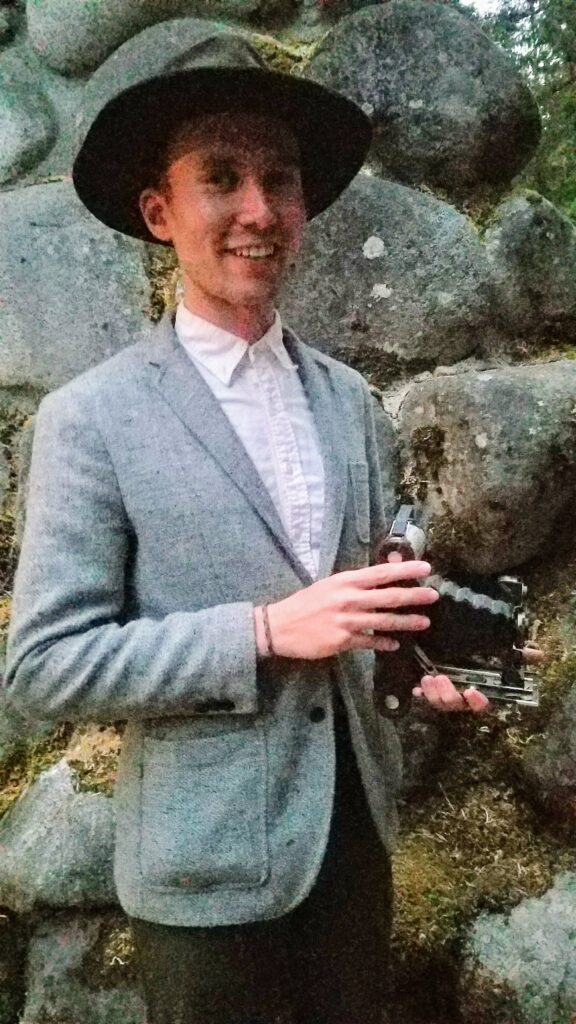
Verisimilitude is a beautiful world, the quality of seeming real. I heard it best defined a few years back talking to a coworker at Mt. Rainier National Park that had a background in doing costumed interpretation for living history. I was researching running a pop-up interpretive program outside a popular trail parking lot where I portrayed a 1920’s park concessionaire photographer with period postcards on display talking about what their era was like would go on to have mixed results. Some people really engaged with the program and enjoyed the feeling of time travel talking to me. However without adequate signage and out of my ranger uniform, lots of people assumed I was some kind of deranged modern photo hustler instead of a government employee pretending to be a historical deranged photo hustler. This is the only time in my life I’ve had an anxious parent grab their child’s hand and forcibly yank them away from me while studiously avoiding eye contact.
Anyways my coworker told me that the reenactor doesn’t need to know every single thing about the era. They don’t need to have every single button of a costume be period appropriate and sourced from grave robbing them from the moldering bodies they once adorned- the interpreter just needs to create a sense of verisimilitude, for it to feel as if it could be real. You put in the work to do an honest effort to portray the subject, the time and texture of the place they stood in and if it feels truth-ish people will meet you in the middle.
We want to believe. In magicians, in ghosts, in heaven, in aliens, and that the man in a three piece suit bowler hat, and pocket watch is somehow risen from across the years to tell a bunch of tourists in a national park about his log cabin. So if you want to take your players to medieval France, the colonial Philippines, the Persian Empire, or your neighborhood in the 90’s you have to do an honest effort to represent it. The research can be endless and in depth and should continue only as long as you’re having fun and think you can do some justice to imparting the feeling of the setting and then throw in some dragons or aliens to taste.
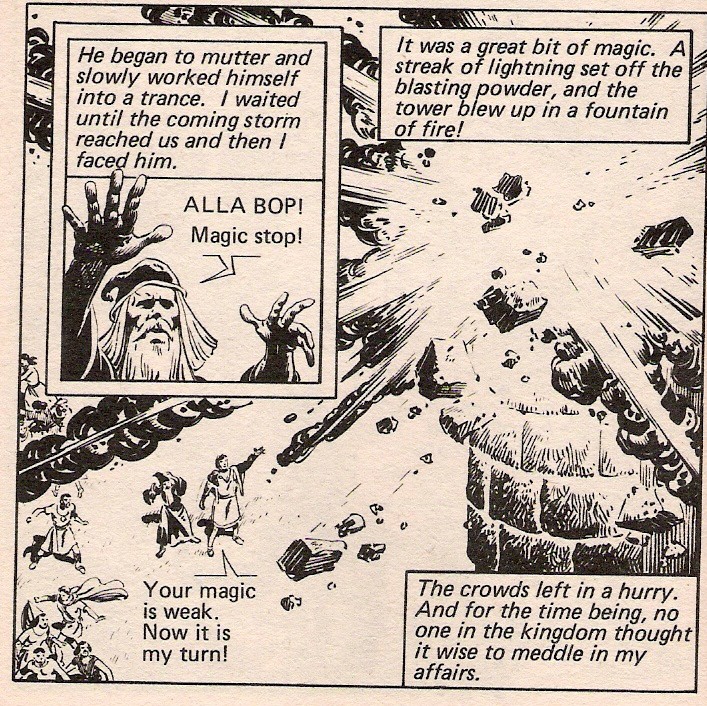
Take that joy and interest you feel and let lightning strike the dry facts and animate them into a twitching shambling imitation of the past. Your patchwork abomination will never be a true representation of the past, but if you squint in the right light, he’ll look right-ish enough for your players to believe in this stitched together simulacrum.
Don’t let the pursuit of perfection stop you from gaming, your misbegotten bastard of a pseudo-historical setting will be real enough for your table if you make them want to believe.
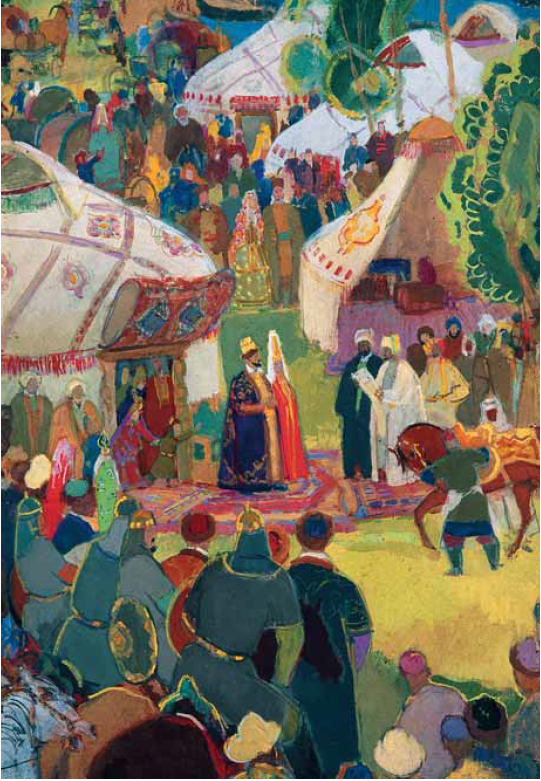
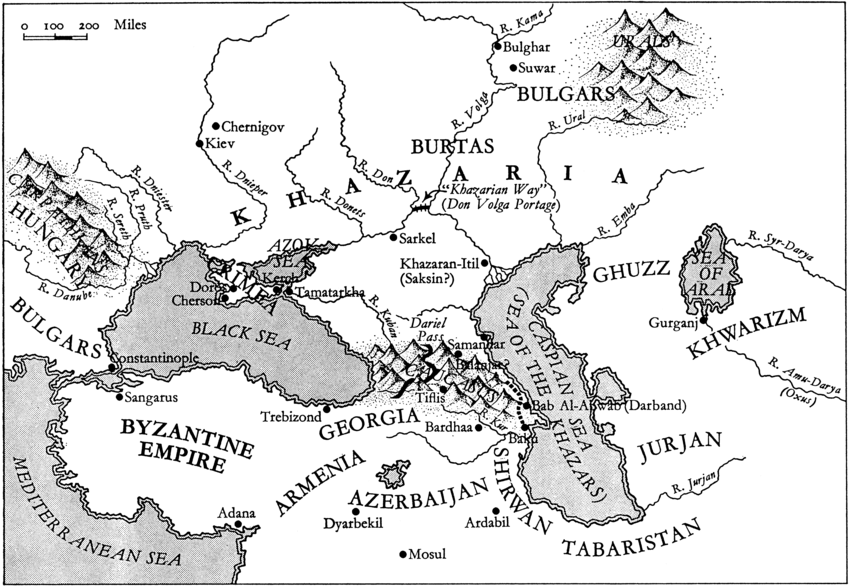
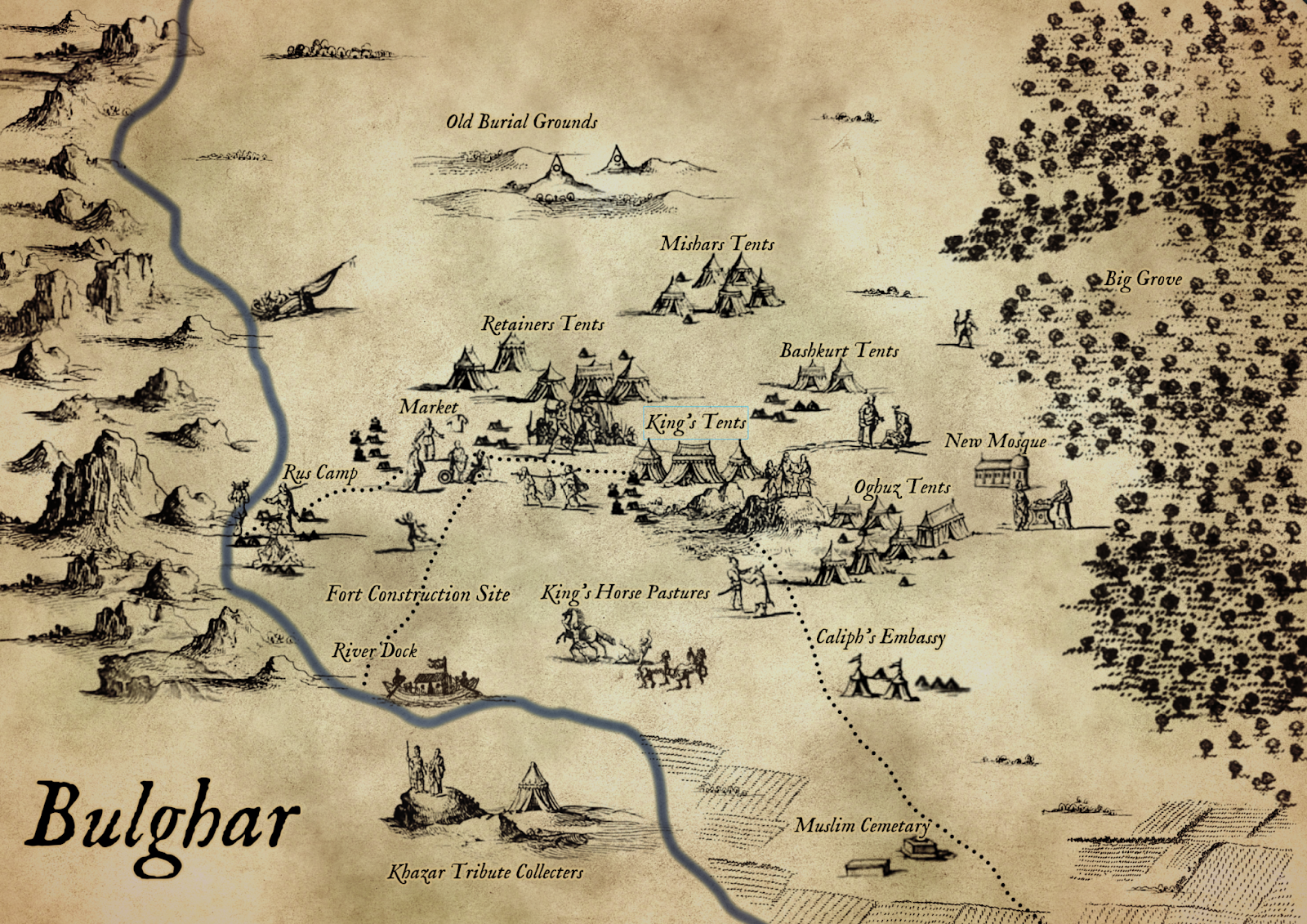
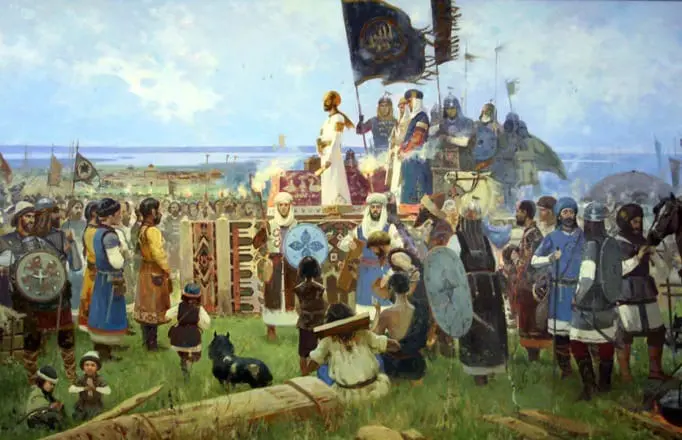
Apparently this is the year of the beta release. I ran a campaign using Mothership house rules I called Beyond Iskander’s Gate for 6 sessions that I canceled due to scheduling issues. But 10th century Central Asia is so rad and deeply underhyped as a setting for fiction and gaming and learning about the workings of Volga Bulgars, Khazaria, the Abbasid Caliphate, The Byzantine Empire, The Rus (Vikings make everything cooler) and their relations with each other kept me interested for months. Shifting frontiers between societies make some of the best RPG historical settings. Cultural variety and political instability are the bread and butter for a party of ambitious misfits with questionable ethics looking for adventure. Adding some paranormal events to the mix is even more fun.
My favorite source for this campaign was “Penguin Classics Ibn Fadlān and the Land of Darkness: Arab Travellers in the Far North” is the most gameable primary source. This review from False Machine really showcases the crazy inspirational value for the RPG enjoyer.
Campaign Overview
The year is 923. The Islamic world thrives in an age of science, law, and cosmopolitan splendor, though the Abbasid Caliphate’s political power wanes beneath the gilt surface.
You are members of the Ikhwān Al-Ṣafā, the Brethren of Purity—a secret order of scholars from Baghdad, devoted to uncovering the universal truth through every field of knowledge, including the occult.
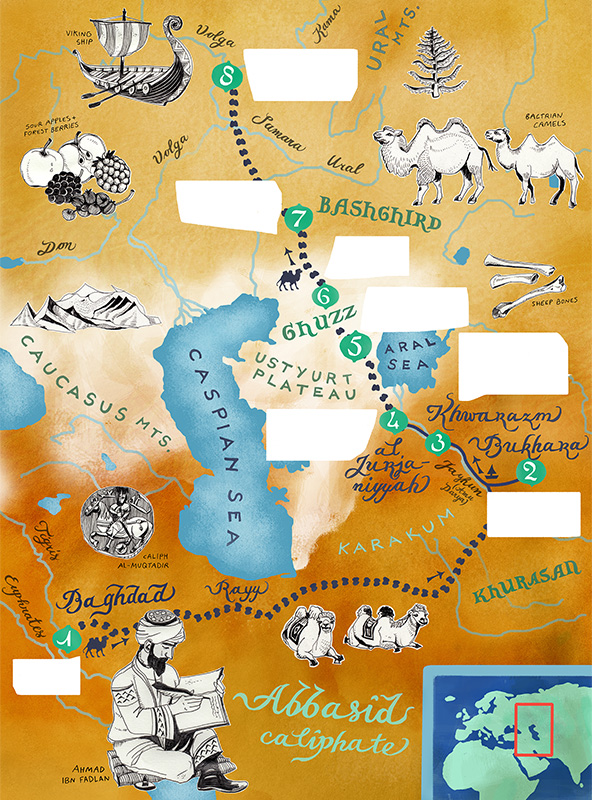
Your mission: Investigate the truth of a mysterious letter from Ibn Fadlan, a member of the order and the caliph’s ambassador to the Volga Bulgars, where he describes the bones of a giant in the northern woods. You’ve just arrived at the great Persian city of Bukhara after months of travel and have months left before your caravan will arrive in the recently converted land of the seminomadic Bulgars, where the riches of the fur and slave trade have grown their influence in the region.
Some learned scholars in Baghdad claim these lands lie beyond the Iron Gates built by Iskander the Great, said to hold back the forsaken barbarian tribes of Gog and Magog until the Day of Judgment.
Beyond Iskander’s Gate Character Creationfor Mothership
Turn from the sleep of negligence and the slumber of ignorance, for the world is a house of delusion and tribulations. -from the Ikhwan al-Safa, or Encyclopedia of the Brethren of Purity
“The most merciful thing in the world, I think, is the inability of the human mind to correlate all its contents. We live on a placid island of ignorance in the midst of black seas of the infinity, and it was not meant that we should voyage far.”
― H. P. Lovecraft
Roll Stats: Strength, Speed, Intellect, and Combat at 2d10+20 each.
Roll Saves: Sanity, Fear, Body at 2d10+20 each.
You have 2 Wounds with 1d10+10 Health each.
Choose a Background (Class) from the list or create one.
Write down the Skills from your Background and their bonus percentage to your rolls using them.
Roll on the party relationships table to figure out your character’s relationship with the character of the player sitting to your right, write it down. Reroll if either of you want.
You start with 100 silver dirhams each, a brass medallion with a dove on it, and 5 pieces of personal equipment you could get in 923 AD Baghdad. Your caravan has enough food. Everyone speaks Arabic.
Pilot (+30%) Navigate (+20%) Swim (+20%) Foreign Lands (+10%) Melee Weapons (+10%) Language- Pick One (+10%)
Create Your Own?
1 Master Skill +30, Two Expert Skills +20, Two Trained Skills +10,
Skills List
Alchemy Ride Mathematics Foreign Lands Siege Weapons Art (x)- Poetry, Music, etc History Survival Athletics Medicine Bureaucracy Melee Weapons Swim
Military Tactics Craft (x)- Blacksmithing, Weaving etc Navigate Language (x)- Greek, Persian, Latin, Turkic, Slav, Rus, Hebrew, Chinese +10% is basic, +20% conversational, +30% fluent. Criminal Occult Construction Disguise Pilot Ranged Weapons Natural World Religion
Any skill can be known at a Master level +30, Expert level +20, or Trained level +10.
Party Relationship Types 1d5 Table (Inspired by Fiasco)
Everyone goes around table to roll to determine their relationship with player’s character to the right.
Type of Relationship
Family
Romance
Society
Crime
Friendship
1. Family
1. Siblings. Blood or Foster 2. Parent and Bastard 3. Cousins 4. Parent and Child 5. Uncle/aunt and nephew/niece
2. Romance
Spouses, loveless
Forbidden lovers
Divorced spouses
Rivals for the same heart
Spouses, committed
3. Society
Rival palace courtiers
Poet and patron
Slave and master
Teacher and student
Foreigners
4. Crime- Banu Sasan
Charlatan and Assistant
House breakers
Assasin and former target
Former Brigands
Opium dealer and habitual user
5. Friendship
Wine drinking buddies
Comrades in arms from the war
Childhood friends
Met on the Haj
Friendly rivals in all things
Some Entries from the Real Journal of Ibn Fadlan
A giant Tikīn told me that in the king’s lands there was a man of extraordinary size. When I arrived in that country, I asked the king about him.
‘Yes, he was living in our country,’ he told me, ‘but he is dead. He was not one of our people, nor was he an ordinary man. His story is as follows. One day some merchants set out in the direction of the Itil River as they were in the habit of doing. The river was in flood and had broken its banks. A day had scarcely passed when a group of these merchants came to me and said: ‘“O king, we have seen a man swimming on the waters a man of such a kind that if he belonged to a people dwelling near us there would be no place for us in these lands, but we would have to emigrate.”
‘I set out on horseback with them and reached the river. I found myself face to face with the man. I saw that judging by the length of my own forearm, he was twelve cubits tall. He had a head the size of the biggest cooking pot there ever was, a nose more than a span long, huge eyes, and fingers each more than a span in length. His appearance frightened me and I had the same feeling of terror as the others. We began to speak to him, but he did not speak to us and only stared. I had him taken to my residence and I wrote to the people of Wīsū, who live three months’ distance from us, to ask for information about him. They wrote to me, informing me that this man was one of the people of Gog and Magog.
Gog and Magog ‘They live three full months from us. They are naked, and the sea forms a barrier between us, for they live on the other shore. They couple together like beasts. God, All-high and All- powerful, causes a fish to come out of the sea for them each day. One of them comes with a knife and cuts off a piece sufficient for himself and his family. If he takes more than he needs, his belly aches and so do the bellies of his family and sometimes he even dies, with all his family. When they have taken what they need, the fish turns round and dives back into the sea. They do this every day. Between us and them, there is the sea on one side and they are enclosed by mountains on the others. The Barrier also separates them from the gate by which they leave. When God, All-high and All-powerful, wants to unleash them on civilized lands, He causes the Barrier to open and the level of the sea to drop and the fish to vanish.’ I questioned the king further about this man and he told me:
‘He stayed with me for a time, but no child could look at him without dropping dead and no pregnant women without miscarrying. If he took hold of a man, his hands squeezed him until he killed him. When I realized that, I had him hung from a high tree until he died. If you want to see his bones and his head, I will go along with you and show them to you.’ ‘I would like very much to see them,’ I answered.
He rode with me into a great forest filled with immense trees and shoved me towards a tree under which had fallen his bones and head. I saw his head. It was like a great beehive. His ribs were like the stalk of a date cluster and the bones of his legs and arms were enormous too. I was astonished at the sight. Then I went away.
Some Entries from the Imagined Journal of Ibn Fadlan (Recovered by the Player Investigators In-Game)
Departure from Bulghar
I hired a crew of Rus, strong men well-versed in rivercraft, to take us down the Atil in their longship. Though pagans, they were skilled and reliable. We sailed toward the forest of the Samara Bend, drawn by the rumors of giants who still remain there by the bones of the one the king had brought me to see. The Rus disbelieved these rumors but have taken my coin to carry myself and Bars the Slav downriver. It is good and proper to seek to learn more about such wonders of Creation so that one may further increase their appreciation of the world and help others do so. The Atil was calm and cold, its waters guided us steadily toward the South for three day’s journey. It is in the land of the Burtas, a tribe opposed to the Bulghars and also subjects of the Khazars.
The Samara Bend and A Sighting
After arriving, we climbed the hills over the Samara Bend, our party reached a dense forest where the trees grew tall and close, their branches entwined. Many birds and animals dwell here but I am told no fur bearing animals live there and the land is rocky and hard so the Burtas do not often visit. As we ventured deeper into the forest, we heard a low thudding in the distance as the beating of a great drum. The sound grew, and with it, the earth seemed to tremble. We halted, peering through the thick undergrowth towards a wide trail, there we beheld the giants.
The four giants stood thrice the height of the tallest Rus, their limbs thick and heavy, their skin the color of stone.They wore no clothes to cover their nakedness, both their men and women. Their hair hung in matted locks about their shoulders. They seemed to possess great strength but little in the way of reason. Their faces were broad and heavy, with features like boulders.
One of the giants turned its head towards us but did not see. We took this as a sign and departed, careful to avoid making any sound. We did not stop until we had returned to our beached ship, giving thanks to Allah for our escape. I have been told that these are the people of Gog and Magog by the Bulghars. Bars said the Rus named them “jotun” and pressed upon us to leave as they think them eaters of man as the Bulghars do. I reminded them of the half payment of silver still awaiting them on my return and they relented
The Ritual
Bars and I disembarked with caution, leaving the longship along the shore. The Rus remained behind, their faces pale with fear, unwilling to follow into the dense forest. With Bars leading the way, we climbed the hills, moving through thick underbrush and towering trees following the trail of the giants until we came upon a clearing.
Four giants stood before an outcropping around a small cave entrance where a landslide had fallen from the cliff. We watched from the brush as the giants conducted a strange ritual. They each carried a slain deer in two great hands with the same ease as a man holds a chicken. With care, they took the deer’s blood in their hands and each dripped it over glyphs carved into the stone around the cave’s entrance placing each before setting the remains aflame with loud shouts much like words but like no tongue known to me. We waited until the giants had finished their work and left down their trail before we approached the cave.
The Cave and the Giants’ Return
Bars agreed to stand outside to watch so that we would not be caught and trapped in the cave without escape. The entrance to the cave through the ash and remains was not wide enough to admit the giants, and beyond it lay a wide carved passage that led deep into the earth. I followed it, a torch flickering on the walls, revealing more of the lined shapes etched into the stone.
The passage opened into a vast domed chamber, hewn from the rock by hands larger than those of men. The air was thick with musty scent, and the walls were lined with enormous white stone vats. Curious, I pushed with strain to remove the stone lid of one. Each was filled with a dark, viscous fluid. I leaned over one of the vats to peer inside, and something cold and sharp leaped forth and bit into my flesh. I recoiled, only to see a pale, writhing worm burrowing beneath my skin. I tried to remove it, but it was too deep, its movement sickening me as it squirmed in my veins. I was overcome with dread.
Before I could gather my thoughts, Bars let out a shout of warning. The giants had returned. Their awful voices echoed with rage. I left the cave and we took flight as the giants closed behind us.They were upon our heels before we could reach the thick forest where they would be slow.
They caught Bars, and rended him in their hands as one smashes a grasshopper. A true friend, his life snuffed out in an instant. I was blessed to enter a thick stand of trees as another came for me, unable to pass quickly. I barely reached the longship as the giants began hurling logs and boulders at us. The Rus, seeing the danger, had pushed off from the shore with haste and I had to wade through water to reach the ship in time. One of their number was struck and killed by a rock of great size. The longship rocked violently but was not overturned. I could do nothing but collapse overcome by exhaustion. We returned north, each day bringing us further from this darkness by the light of Allah’s grace.
Inspirations:
Ibn Fadlan in the Lands of Darkness by Ibn Fadlan and assorted other writers The 13th Warrior directed by John McTiernan Eaters of the Dead by Michael Crichton Gentlemen of the Road by Michael Chabon The Jews of Khazaria by Kevin Alan Brook The Long Ships or Red Orm by Frans G. Bengtsson Ikhwan al-Safa, or Encyclopedia of the Brethren of Purity The Strain (Nocturna) by Chuck Hogan and Guillermo del Toro The Assassin’s Creed Video Game Series Against the Cult of the Reptile God by Douglas Niles Silent Legions by Kevin Crawford Armies of the Volga Bulgars Khanate of Kazan by Osprey Publishing Legacy of the Bieth by Allandaros Iron Gates Blog Series by Skerples, Against The Wicked City by Joseph Manola
P.S: Beware of Overprepping
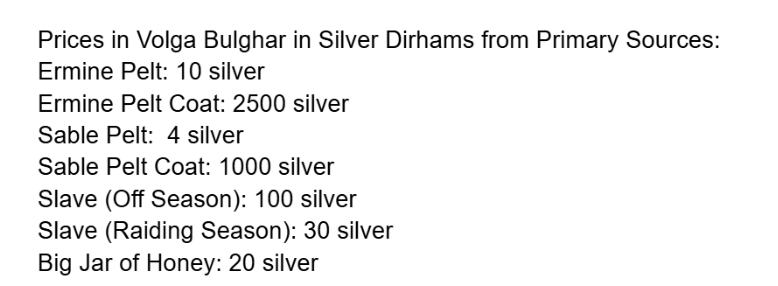
The problem with historical settings if you have a tendency to hyperfixate and overprep is that the well of lore you can draw from research is endless. It’s the same difficulty with running a game in a detailed preexisting setting like Star Wars or Tekumel x10000. If you’re a recovering overprepper like me you fall into old habits and your notes can start looking like this.
When you start researching primary sources to create an accurate price list for goods when you’re running a paranormal investigation style game without asking how your players experience will improve by being able to know the historically accurate relative worth of an ermine coat and a big jar of honey you may be in the throes of a hyperfixation and not prepping useful material for your next sessions adventures.
I need to get over my misplaced desire to do “historical justice” to representing the era and embrace the “good enough, let’s have some fun” vibe that good RPG historical settings can provide. Kevin Crawford, author of Stars Without Number and a bunch of related systems recommends a simple guiding principle for all RPG campaigns, but I’d say applies even more to historical campaign prep.
“Am I having fun? If you’re enjoying yourself, then you can keep building. We follow this hobby because it’s fun, and if you’re enjoying the process then you should let yourself have your indulgence. Am I going to need this for the next session? If what you’re creating is something you know you’re going to need for the next game session, then you should finish it. Don’t let this feeling of obligation extend to every detail, however; it can be easy to imagine situations where you’ll need to elaborate some NPC or organization or location, but if you respond to every such possibility you’ll never get away from the drawing board. If you’re not having fun and you don’t need it for your next game session, stop it. You’re going to exhaust yourself on minutiae and trivia and not have the energy to do the parts you really do need, or the vigor needed to actually run this for the group.”